
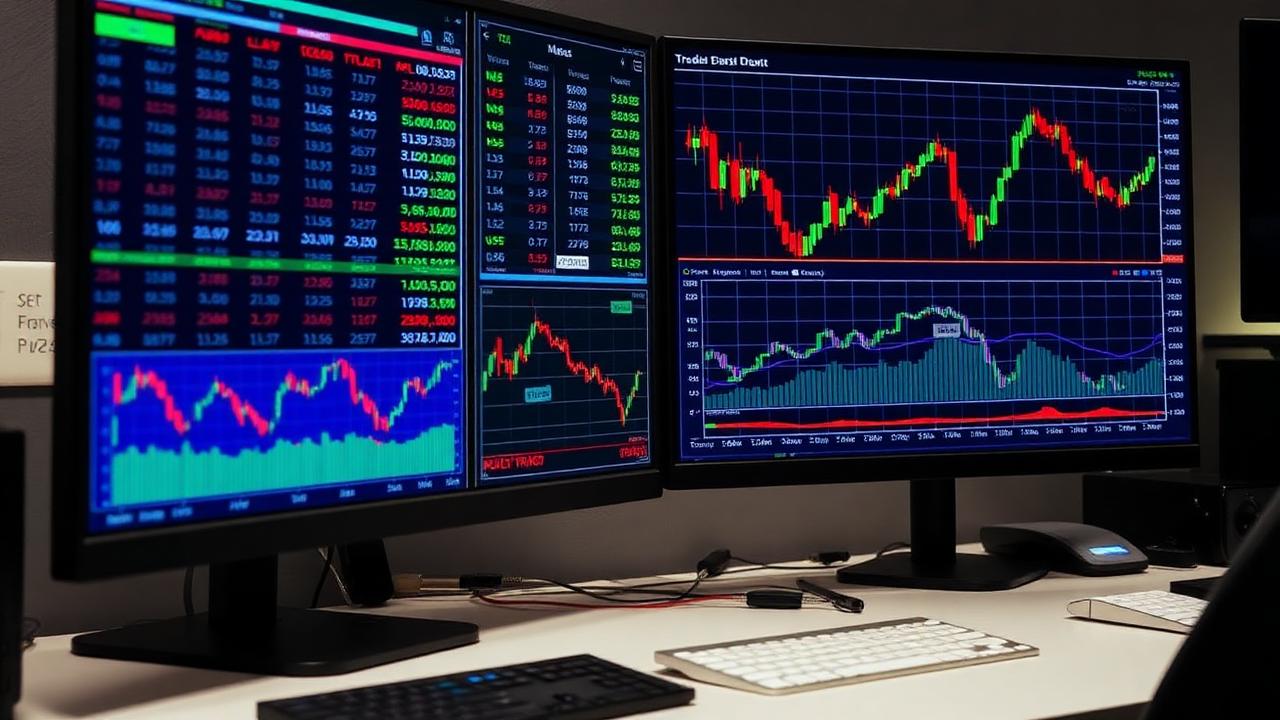
Futures contracts: what you are actually trading
A futures contract is a standardized agreement to buy or sell a specific quantity of an asset at a future date. ES (E-mini S&P 500) = $50 × index price. NQ (E-mini Nasdaq) = $20 × index. CL (Crude Oil) = 1,000 barrels. GC (Gold) = 100 troy ounces. You don't take delivery — you close before expiration or roll to the next contract.
Tick size and tick value
- ES — tick = 0.25, tick value = $12.50. 4 ticks = 1 point = $50.
- NQ — tick = 0.25, tick value = $5. 4 ticks = 1 point = $20.
- CL — tick = 0.01, tick value = $10.
- GC — tick = 0.10, tick value = $10.
- Micros (MES, MNQ, MCL, MGC) are 1/10 the size — perfect for learning.
Margin and leverage in futures
Day-trading margin on ES might be $500–$1,500 per contract while controlling ~$250,000 of index exposure. That is roughly 200x leverage. A 10-point move against you on 1 ES = $500 loss in minutes. This is why futures destroy undisciplined traders and reward strict risk rules.
Futures contracts: what you are actually trading
A futures contract is a standardized agreement to buy or sell a specific quantity of an asset at a future date. ES (E-mini S&P 500) = $50 × index price. NQ (E-mini Nasdaq) = $20 × index. CL (Crude Oil) = 1,000 barrels. GC (Gold) = 100 troy ounces. You don't take delivery — you close before expiration or roll to the next contract.
Tick size and tick value
- ES — tick = 0.25, tick value = $12.50. 4 ticks = 1 point = $50.
- NQ — tick = 0.25, tick value = $5. 4 ticks = 1 point = $20.
- CL — tick = 0.01, tick value = $10.
- GC — tick = 0.10, tick value = $10.
- Micros (MES, MNQ, MCL, MGC) are 1/10 the size — perfect for learning.
Margin and leverage in futures
Day-trading margin on ES might be $500–$1,500 per contract while controlling ~$250,000 of index exposure. That is roughly 200x leverage. A 10-point move against you on 1 ES = $500 loss in minutes. This is why futures destroy undisciplined traders and reward strict risk rules.
How to actually use "What Futures Are and Why Traders Use Them"
This is a deep-skill lesson inside Futures Trading: Indexes, Oil, Gold & Contracts. Read it once for understanding, then come back with a real situation in mind. The list below tells you exactly how to convert reading time into ability.
Pros — what this unlocks
- It is a real lever inside Futures Trading: Indexes, Oil, Gold & Contracts — used correctly, small repeated wins compound into outcomes that look like luck from the outside.
- It is teachable: once you understand the mechanics you stop relying on gut feel and start operating on a system you can debug.
- It works across cycles, niches, and economic conditions because the underlying principle is rooted in human behavior, not a passing trend.
- It separates beginners from professionals fast — most people never sit down to learn this, so the reps put you in a small minority.
- Once internalized, it lowers stress because you have a documented process to fall back on instead of inventing a new plan every week.
Cons — the honest downsides
- It takes longer than the internet promises. Real fluency is reps over time, not a weekend course.
- It is BORING in the middle — fundamentals stop feeling exciting around week 3, which is exactly when most people quit.
- Feedback is delayed. You will do the right thing for a while before results show up, and that messes with motivation.
- It demands honesty about your numbers, time, and mistakes. People who refuse to track will not improve, period.
- There is real opportunity cost — every hour spent here is an hour not spent elsewhere. Make sure this is the right priority for your stage.
What can go wrong (the risks nobody warns you about)
- Acting before you understand — copying a tactic from a 30-second clip without the underlying principle. The tactic stops working in 3 months and you have no idea why.
- Scaling too fast — putting bigger money, time, or commitment behind something you have not validated at small scale. One bad assumption multiplied by 10x size wipes out months of progress.
- Hidden costs — fees, taxes, returns, refunds, churn, or maintenance the original 'pitch' never mentioned. Always model the worst case.
- Legal and tax exposure — some moves trigger licensing requirements, sales tax, self-employment tax, or contracts you did not realize you were on the hook for.
- Burnout — chasing optimization at the expense of sleep, relationships, and physical health. A strategy that wrecks your life is not a strategy, it is a trap.
- Survivorship bias — only studying winners and copying their visible moves while ignoring the 100 people who did the same thing and failed silently.
Common mistakes (and the fix for each)
- Mistake: trying to learn 5 things at once. Fix: pick ONE and give it focused reps before adding a second.
- Mistake: no written plan, just a vague intent. Fix: a one-page doc with your goal, your daily action, your weekly review, and your kill criteria.
- Mistake: not tracking outcomes. Fix: a simple spreadsheet or notebook. If you cannot measure it, you cannot improve it.
- Mistake: ignoring the boring parts (legal, taxes, accounting, contracts). Fix: schedule one boring task per week — they compound the same as the fun ones.
- Mistake: comparing your week 1 to someone else's year 5. Fix: only compare yourself to your past self.
- Mistake: quitting after the first failure. Fix: assume your first 5 attempts are tuition. Plan for them. Keep going.
Best practices that separate pros from beginners
- Write your process down BEFORE you execute it — if you cannot write it, you cannot repeat it.
- Start absurdly small. The first version should embarrass you with how minimal it is. You are stress-testing the system, not winning yet.
- Review weekly in writing — 30 minutes on Friday or Sunday: what worked, what didn't, what changes next week.
- Build a checklist for every recurring action. Pilots use checklists to free their brain for the unexpected — same principle.
- Surround yourself with people one level above you. Watching a peer who is 6 months ahead is worth more than 100 hours of free content.
- Protect your time blocks. Two protected 90-minute deep-work sessions per day will outperform 8 distracted hours every time.
Realistic timeline for THIS lesson
- First useful signal: 2–4 weeks of structured practice to start producing usable output.
- Operating fluency: 3–6 months of weekly cycles to perform reliably without coaching.
- Suggested daily input: 30–45 minutes, ideally as one protected deep-work block.
- Quit criteria: only walk away when you hit pre-written kill conditions, never on a bad day. Decide today what failure would look like.