
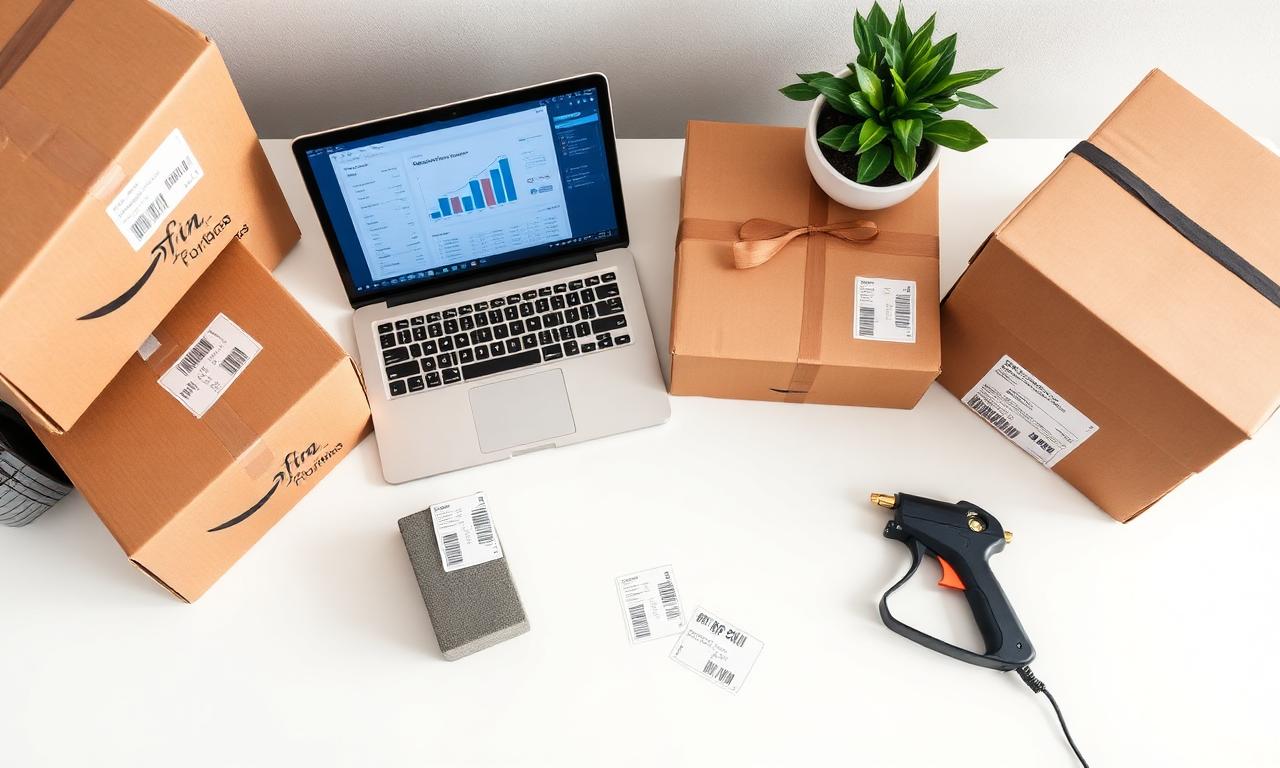
FBA in one sentence
FBA stands for Fulfillment by Amazon. You ship inventory to Amazon's warehouses; Amazon stores it, picks it, packs it, ships it to the customer, and handles returns and most of the customer service. You keep the brand, the listing, and the profit margin after Amazon's fees.
FBA is not a get-rich-quick scheme. It is a real product business where the hard work is product selection, sourcing, branding, listing optimization, and inventory math. Amazon just removes the logistics bottleneck so one person can run a brand that would have needed a warehouse and a team ten years ago.
Why sellers choose FBA over self-fulfillment
The single biggest reason is the Prime badge. Prime-eligible listings convert dramatically better — typical lift is 30%–60% on the same listing once Prime turns on — because Prime members filter for it and trust the 1–2 day delivery promise. You cannot fake Prime; FBA is the easiest path to earning that badge.
The second reason is leverage of time. With FBM (Fulfillment by Merchant) you pack and ship every order yourself. At 5 orders a day that is fine; at 50 it eats your week; at 500 you cannot scale without hiring. FBA lets you go from 5 to 5,000 orders without touching a single box after the initial shipment to Amazon.
How money actually flows in FBA
Every 14 days Amazon pays out your sales minus three buckets of fees: the referral fee (a percentage of the sale price that depends on the category — usually 8%–15%), the FBA fulfillment fee (a flat per-unit fee based on size and weight), and monthly storage fees (per cubic foot, much higher in Q4). Account for all three before you call something 'profitable'.
A simple worked example. You sell a silicone kitchen gadget for $24.99. Referral fee at 15% is $3.75. FBA fulfillment fee for a small standard item is about $3.86. Storage is roughly $0.10/month. Your landed cost (manufactured + freight to Amazon) is $4.00. Net profit per unit ≈ $24.99 − $3.75 − $3.86 − $0.10 − $4.00 = $13.28, or about a 53% margin. That is a healthy FBA product.
Private label vs wholesale vs arbitrage vs handmade
Private label means you put your own brand on a manufactured product. It is the model most people picture when they hear 'Amazon business' — highest margin, most defensible, slowest to start. This module focuses on private label.
Wholesale means you buy authentic branded products from authorized distributors (think Crest toothpaste from a real Procter & Gamble distributor) and resell on existing listings. Lower margin but no listing/launch risk.
Retail and online arbitrage means you buy clearance products at Target/Walmart/online and flip them. Real money exists here but it does not scale — every unit is a one-off treasure hunt.
Handmade is Amazon's Etsy competitor. Lower fees, but only viable for true handcrafted goods.
Who FBA is good for, and who it isn't
Good fit: you have $3,000–$10,000 of true risk capital (not rent money), you can wait 90–120 days for first profit, and you enjoy spreadsheets, photography, and customer obsession.
Bad fit: you need income next month, you cannot stomach a unit selling for a loss while you optimize a listing, or you want a 'passive' business with zero learning curve. FBA is leveraged, not passive.