
Three Ways to Answer One Question
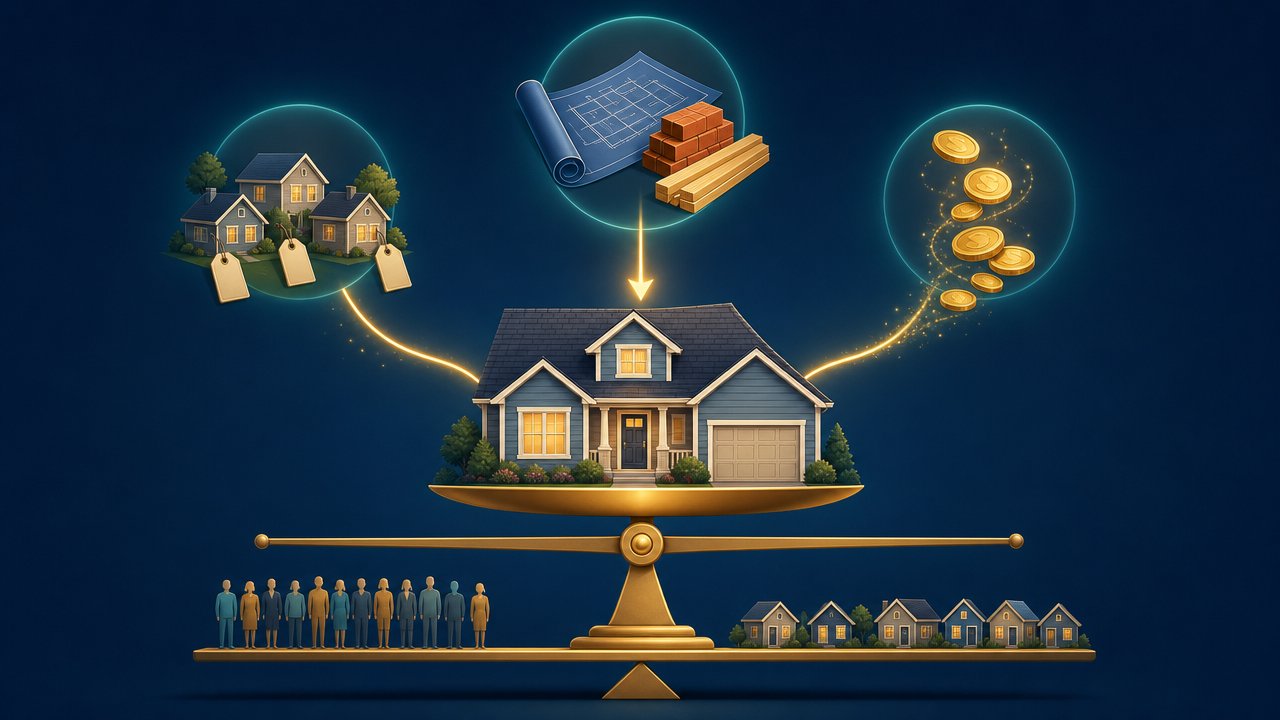
Ask most people what a house is “worth” and they'll name a single number, but that number is really an estimate built from three independent lines of reasoning that professional appraisers are trained to reconcile. The first is the sales comparison approach: what have genuinely similar properties nearby actually sold for recently. The second is the cost approach: what would it cost to buy the land and rebuild the structure from scratch today, minus whatever depreciation the existing structure has accumulated. The third is the income approach: for a property that generates rent, what is that income stream worth as an investment, discounted at a market-appropriate rate. Most single-family home appraisals lean almost entirely on the sales comparison approach, because there's usually enough comparable sales data to make it reliable; the cost approach matters more for unusual properties with few comparables, and the income approach matters most for rentals and commercial buildings. A licensed appraiser doesn't just pick whichever approach gives the friendliest number — they're trained to run more than one approach and reconcile the differences, weighting the most reliable method most heavily. Later lessons in this module walk through each approach in real depth, but the core idea to hold onto from lesson one is this: a property's value isn't a fact sitting inside the walls, it's a conclusion built from comparing that property against the market around it.